 Spanish
Is the Pledge of Allegiance a Prayer? The Legal Answer
- in Laws
Get Someone Out of Jail Fast — 24/7 Help
Reliable, confidential bail bonds available anytime, anywhere in California. We move quickly so you can bring your loved one home.
Get in TouchThe version of the Pledge of Allegiance we know today is not the one originally written in the 19th century. Its text has been changed by Congress, most notably with the addition of “under God” during the Cold War. This single change transformed a patriotic oath into a subject of intense constitutional debate. To understand why the Pledge remains controversial, you have to look at its history and the legal challenges it has faced over the years. These challenges all revolve around one central question: is the pledge of allegiance a prayer? Let’s look at its evolution and the court decisions that followed.
Although violating statutes related to school prayer and the Pledge of Allegiance does not lead to an arrest that would require bail bonds, they could bring fines and other penalties should school districts ignore the laws in their state. Bail bonds are necessary when someone violates a criminal law while civil violations lead to fines and other penalties rather than arrest. Prayer in schools as well as the reciting of the Pledge of Allegiance remain controversial throughout the country.
What is the Pledge of Allegiance?
The Pledge of Allegiance is a familiar patriotic verse that many of us learned in school. It’s a promise of loyalty to the United States flag and the nation it represents. When people recite the Pledge, they are expressing their commitment to the country’s core values. While the act of saying the Pledge is common in schools and at public events, its meaning and the history behind its words are often less understood. It serves as a daily or ceremonial reminder of national unity and the principles of the American republic, intended to foster a sense of patriotism among citizens from a young age.
The Full Text and Meaning
Understanding the Pledge starts with its words. The current version is a concise statement of loyalty and belief in the nation’s ideals. The full text is: “I pledge allegiance to the Flag of the United States of America, and to the Republic for which it stands, one Nation under God, indivisible, with liberty and justice for all.” Each phrase carries significant weight, from the personal promise of “I pledge allegiance” to the foundational principles of a unified nation that cannot be divided. The final words, “with liberty and justice for all,” summarize the ultimate promise of the American system of government for every citizen.
History and Evolution of the Pledge
The Pledge of Allegiance you might know today is not the original version. Its wording has changed significantly over the years, with each modification reflecting a specific period in American history. These changes often occurred during times when the country was focused on promoting national unity, such as after the Civil War, or defining its identity against global adversaries, like during the Cold War. The evolution of the Pledge tells a story about the nation’s shifting values and the ongoing conversation about what it means to be an American. It’s a living document in a way, shaped by the social and political pressures of its time.
Original Versions and Key Changes
The first version of a pledge was written in 1885 by Captain George Thatcher Balch, a Civil War officer who wanted to teach patriotism to children in his free schools for immigrants. However, the version that gained widespread popularity was written in 1892 by Francis Bellamy, a magazine manager. His pledge was created to be part of a national school celebration of Columbus Day. Over the years, small changes were made, but Bellamy’s version remained the foundation. Congress officially recognized the Pledge of Allegiance in 1942, solidifying its place in American civic life and formalizing the tradition of its recitation in schools and public ceremonies across the country.
The Addition of “Under God”
Perhaps the most well-known change to the Pledge was the addition of the phrase “under God.” This modification was signed into law on Flag Day, June 14, 1954, during the height of the Cold War. At the time, many Americans wanted to draw a clear line between the United States and the state-sponsored atheism of communist countries like the Soviet Union. Adding “under God” was seen as a way to emphasize the nation’s religious heritage and moral foundation. Despite legal challenges over the years, Congress has maintained that including this phrase in the Pledge is constitutional and serves as a patriotic exercise, not a religious one.
How the Supreme Court Drew the Line on Prayer and the Pledge
Two Supreme Court decisions during the 1960s banned prayers in public schools and courts have strengthened those decisions over the years. By the same token, the Pledge of Allegiance has been supported by the courts since the 1940s, although it must be voluntary, not required, of school children. Despite that decision, lawsuits continue, arguing that the Pledge violates the Establishment Clause in the First Amendment because it contains the words “under God.”
Why Is Prayer Banned in Public Schools?
In Colonial America, prayer was common since many of the schools were created by religious organizations. In fact, Bible study was often part of the curriculum for early schools in this country, long after the adoption of the United States Constitution and the Bill of Rights. As ethnic and religious identities in America changed with immigration, religious influences were minimized in public schools, but mostly in urban areas. Many rural area schools in the country continued to allow prayer in school. As early as 1910, however, lawsuits challenged religious requirements in public schools under the belief that students should not be forced to practice a faith that was not their own. Starting in 1962, courts ruled that requiring students to begin the day with prayer or Bible reading was unconstitutional as well as ruling against laws that required the posting of religious documents, like the Ten Commandments, in classrooms. In the 1980s, some states allowed schools to have a “moment of silence,” and those have mostly been upheld in courts.
The Pledge of Allegiance: Is It a Prayer?
The Pledge of Allegiance first appeared in a national magazine in 1892 and was later modified by Congress and President Dwight D. Eisenhower to add the words “under God.” Schools throughout the country regularly recite the Pledge as part of the school day. In the 1930s, West Virginia required public school students to salute the flag and recite the Pledge. Members of a religious organization objected and the students who refused to follow the rule were expelled. Three years later, the Supreme Court ruled that students could not be forced to recite the Pledge. This has not stopped continued lawsuits related to the reciting of the Pledge, however. In 2004, the Supreme Court agreed to review a case that involved the constitutionality of the Pledge. The Court did not rule on the constitutionality of the Pledge but on procedural grounds.
Legal Rulings and Individual Rights
The core of the debate around the Pledge of Allegiance in schools comes down to a simple question: can a student be forced to participate? The Supreme Court provided a clear answer decades ago. In the landmark 1943 case West Virginia State Board of Education v. Barnette, the Court ruled that students cannot be compelled to salute the flag or recite the Pledge. This decision affirmed that such an act is a form of speech, and forcing it violates a student’s First Amendment rights. This ruling is pivotal because it ensures that participation must be completely voluntary, and schools cannot punish students for choosing to sit out the Pledge for any reason, whether religious, political, or personal.
The Right to Not Stand
Even with the Barnette ruling, the Pledge remains a source of legal challenges, largely due to the phrase “under God.” Critics argue that including this phrase in a public school recitation violates the Establishment Clause of the First Amendment, which prevents the government from establishing or endorsing a religion. In 2002, a federal court agreed, finding the phrase unconstitutional for public schools, though the Supreme Court later sidestepped a final ruling on the issue. This ongoing tension highlights the delicate balance between honoring patriotic traditions and protecting the individual rights of every student in a diverse classroom environment.
How State Laws Tackle Prayer and the Pledge
There have been several state rulings related to prayer in school or the reciting of the Pledge of Allegiance. A student in Alabama filed suit against a Walker County school when he was punished for raising his fist during the Pledge. The case was remanded for further review by the Eleventh Circuit Court of Appeals. The Eighth Circuit Court of Appeals ruled that a Devall’s Bluff School District practice of opening teacher meetings with a prayer violated the Constitution. Indian River School District in Delaware was challenged because they started school board meetings with a prayer but a federal district court ruled it was constitutional, however, the same challenge to a Tangipahoa Parish School District’s similar practice was found to be unconstitutional. Jacksonville Public School Board in Florida has faced many challenges for allowing prayer at graduation while the Eighth Circuit Court of Appeals also ruled that the reciting of the Lord’s Prayer at graduation did not violate a student’s rights. In 2002, Pennsylvania required all public, private, and parochial school students to recite the Pledge, but the Third Circuit ruled that the statute was unconstitutional. A case in Texas claiming the Pledge was unconstitutional was dismissed while, in Virginia, the Fourth Circuit Court of Appeals ruled that requiring the Pledge daily but making it voluntary, was not unconstitutional. Although most schools have eliminated prayer requirements, courts have consistently ruled that requiring voluntary reciting of the Pledge of Allegiance is not a violation of the Constitution. There will more than likely be continued challenges to this decision, but currently, students can be asked to recite the Pledge of Allegiance.
How the Pledge is Recited
While many of us learned the Pledge of Allegiance as children, there’s an official protocol for how it should be delivered. The words themselves are defined by federal law, but the physical gesture that accompanies them has a surprisingly interesting history. Understanding the proper way to recite the Pledge, and how that has changed over time, gives us a clearer picture of its place in American culture. The current practice is a simple, respectful gesture, but it replaced a much different one for reasons rooted in world history.
Official Protocol
The United States Flag Code specifies the exact wording and actions for the Pledge of Allegiance. The official text is, “I pledge allegiance to the Flag of the United States of America, and to the Republic for which it stands, one Nation under God, indivisible, with liberty and justice for all.” According to the code, when reciting the Pledge, you should stand at attention and face the flag with your right hand over your heart. This simple and solemn gesture is meant to show respect for the flag and the nation it represents. It’s the standard practice you see in classrooms, at government meetings, and during community events across the country, providing a uniform way for citizens to show respect.
The Historical “Bellamy Salute”
The hand-over-heart gesture wasn’t always the standard. The original salute, created by Francis Bellamy who also wrote the Pledge, was quite different. Initially, it involved touching the forehead and then the heart. It later evolved into what became known as the “Bellamy Salute,” where the reciter would extend their right arm straight out toward the flag. This practice continued for decades until the 1940s. During World War II, the salute’s striking resemblance to the Nazi salute used in Germany became a major concern. To avoid any association with fascism, Congress officially amended the Flag Code in 1942, replacing the Bellamy Salute with the hand-over-heart gesture we use today.
The Pledge in a Social and Cultural Context
Beyond the words and gestures, the Pledge of Allegiance holds a unique place in American society. For most people, it’s a memory from childhood, a daily ritual that started each school day. This strong association with education shapes how it’s viewed and practiced. While it’s a common tradition, its role is often debated, especially when compared to other patriotic customs like the National Anthem. The context in which we encounter the Pledge—often a classroom setting—differs greatly from the large public events where the anthem is played, influencing how we interact with each.
A School-Centered Tradition
The Pledge of Allegiance is a fixture in many American schools, but it’s important to know that participation is voluntary. The Supreme Court has affirmed that schools cannot legally force students to say the Pledge or punish them for choosing not to participate. This protects students’ First Amendment rights. For many educators, the daily recitation is less about instilling patriotism and more about establishing a routine to bring order to the classroom at the start of the day. It serves as a moment to unify the class and transition into lessons. However, this school-centered tradition means that for many adults, reciting the Pledge is something they haven’t done since graduation, making it feel like a distant part of their past.
Comparison to the National Anthem
While both are patriotic observances, adults tend to treat the National Anthem with a different level of reverence than the Pledge of Allegiance. At a sporting event or official ceremony, you’ll see a crowd fall silent and stand for “The Star-Spangled Banner,” with many people singing along. The Pledge, however, is rarely recited at these large public gatherings. This difference in behavior likely stems from context. The Pledge is tied to the routine of the school day, while the anthem is reserved for events of greater significance or scale. As a result, the anthem often feels like a more formal and serious patriotic expression for adults, while the Pledge remains a nostalgic, and sometimes controversial, symbol of their school years.
Frequently Asked Questions
Can my child’s school legally require them to recite the Pledge of Allegiance? No, they cannot. The Supreme Court ruled back in 1943 that forcing a student to salute the flag or recite the Pledge violates their First Amendment rights. Participation must be completely voluntary, and a school cannot punish a student for choosing not to say it, whether their reasons are personal, political, or religious.
So, is the Pledge of Allegiance legally considered a prayer? Despite the inclusion of “under God,” the Pledge is not legally classified as a prayer. Courts have generally upheld it as a patriotic exercise intended to honor the country, not as a religious activity. The key distinction that has allowed it to remain in schools is that, unlike mandatory prayer, participation in the Pledge is optional for all students.
Why was the phrase “under God” added to the Pledge? The phrase “under God” was added to the Pledge of Allegiance in 1954, during the Cold War. At the time, Congress wanted to create a clear contrast between the United States and the state-sponsored atheism of the Soviet Union. Adding the phrase was a way to publicly affirm the nation’s religious heritage and moral foundations.
What was the original salute for the Pledge, and why did it change? The original gesture, known as the “Bellamy Salute,” involved extending the right arm straight out toward the flag. This was the standard practice for decades. However, during World War II, its strong resemblance to the Nazi salute became a serious concern. To avoid any association with fascism, Congress officially changed the protocol in 1942 to the hand-over-heart gesture that is used today.
What happens if a school district violates these laws about the Pledge or school prayer? If a school district ignores court rulings and, for example, punishes a student for not reciting the Pledge, it would be a civil matter, not a criminal one. The district could face lawsuits, which might result in fines or other court-ordered penalties. This is different from a criminal violation, where an arrest would occur and might require bail bond services.
Key Takeaways
- The “Under God” Phrase Is a Modern Addition: The Pledge of Allegiance didn’t always include “under God.” This phrase was added in 1954 during the Cold War, and it’s the main reason the Pledge continues to face legal challenges over its place in public schools.
- Reciting the Pledge Is Always Voluntary: Thanks to a landmark Supreme Court decision from 1943, no student can be forced to say the Pledge or be punished for choosing not to participate. This protects every student’s First Amendment rights.
- Courts Define the Pledge as Patriotic, Not Religious: While mandatory prayer is banned in public schools, the Pledge is legally considered a patriotic exercise. This distinction is why its voluntary recitation is permitted, despite the ongoing debates.
Related Articles
- School Prayer & Pledge of Allegiance: The Laws
- Free Speech in Universities | Espinoza Bail Bonds
- 4th of July Celebrations | Espinoza Bail Bonds
- US Voting Rights | Espinoza Bail Bonds
- The Vital Importance Of Memorial Day | Espinoza Bail Bonds
About the Author
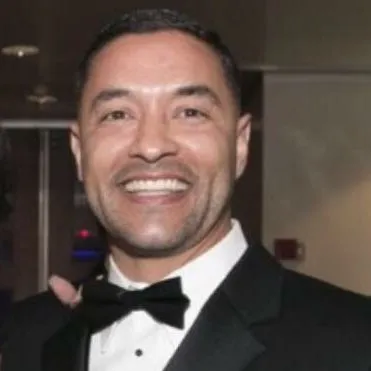
Jose F. Espinoza
Licensed Bail Agent #1841969 · Founder, Espinoza Bail Bonds
Jose F. Espinoza is a U.S. Army veteran, former Military Police officer, and licensed bail agent who founded Espinoza Bail Bonds in 2014. After 25 years of decorated military service, he now brings the same discipline, loyalty, and calm leadership to helping families navigate the bail process. Jose believes in second chances and treats every client with dignity, respect, and compassion.

 Speak to a Bail Agent:
(844) 325-8424
Speak to a Bail Agent:
(844) 325-8424
 Request a Callback: Call
Me
Now!
Request a Callback: Call
Me
Now!
 Other Options:
Contact Us
Other Options:
Contact Us