 Spanish
Find an Inmate in California for Bail: Quick Guide
- in Jails
Get Someone Out of Jail Fast — 24/7 Help
Reliable, confidential bail bonds available anytime, anywhere in California. We move quickly so you can bring your loved one home.
Get in TouchA confirmed jail location can make your first bail call far more useful. Official records help you replace uncertainty with the details a bondsman needs to act.
Contact Espinoza Bail Bonds now for help locating an inmate and starting the bail process.
The quickest way to find an inmate in California for bail is to search the official county locator where the arrest occurred; check that source first. Gather their full legal name, date of birth, and booking number if available; then carefully confirm the jail, custody status, charges, and listed bail amount online. If the person may be in state prison instead, use the official CDCR search tool; federal custody requires the Bureau of Prisons locator for national records. Save the facility name, booking number, bail amount, and next court date before calling; if no record appears, contact the arresting agency or jail for help. These facts help a bondsman verify the case without repeating your search.
Knowing which system to search, and which details to record, answers the first urgent question before you ask about release. Next, How to find an inmate in California for bail walks through each search route and the information worth saving. The path begins with:
How to find an inmate in California for bail
Start with the county where the arrest happened. Most recent arrests go through a county jail, not a California state prison. An official county search can show the details needed to ask about bail.
Information to gather first
Write down the person’s full legal name, date of birth, arrest city, and likely arrest date. A booking number helps if you have one. Check spelling and any middle name before searching, since small errors can hide the correct record.
Use official government pages instead of search-result listings or paid people-search sites. For example, the San Bernardino County Sheriff inmate locator is the official county tool. Some county systems may require an account before showing inmate information.
County jail search steps
Follow this order to find an inmate in California for bail. Keep notes as you search, because the booking record may change while the jail completes processing.
-
Confirm the arrest county. Ask the arresting agency, review any citation, or call the local police department if the county is unclear.
-
Open that county sheriff or corrections department website. Find its inmate locator, jail roster, or “Who’s in Jail” page.
-
Search the full name and date of birth. Try a middle name or alternate spelling only when the first search returns no match.
-
Record the booking number, facility name, custody status, charges, and bail amount shown. These details help prevent delays when asking about release.
-
If no record appears, call the county jail and ask whether booking is still in progress. Then check nearby counties if the arrest location was uncertain.
A status such as “released” does not always tell you where the person went next. The person may have moved to another agency or facility. Our guide on how to find an inmate in California explains what bail information to collect after finding a record.
County jail versus state prison
Use a county locator for a recent arrest and a possible bail request. Use the CDCR incarcerated records search for someone serving time in a California state prison. CDCR is a statewide prison search, so it is not the first place to look after a local arrest.
If neither search finds the person, check whether a federal agency made the arrest. You can also call the arresting agency and ask which facility received the person. Once you confirm the jail and booking number, you can ask the jail about bail status and release rules.
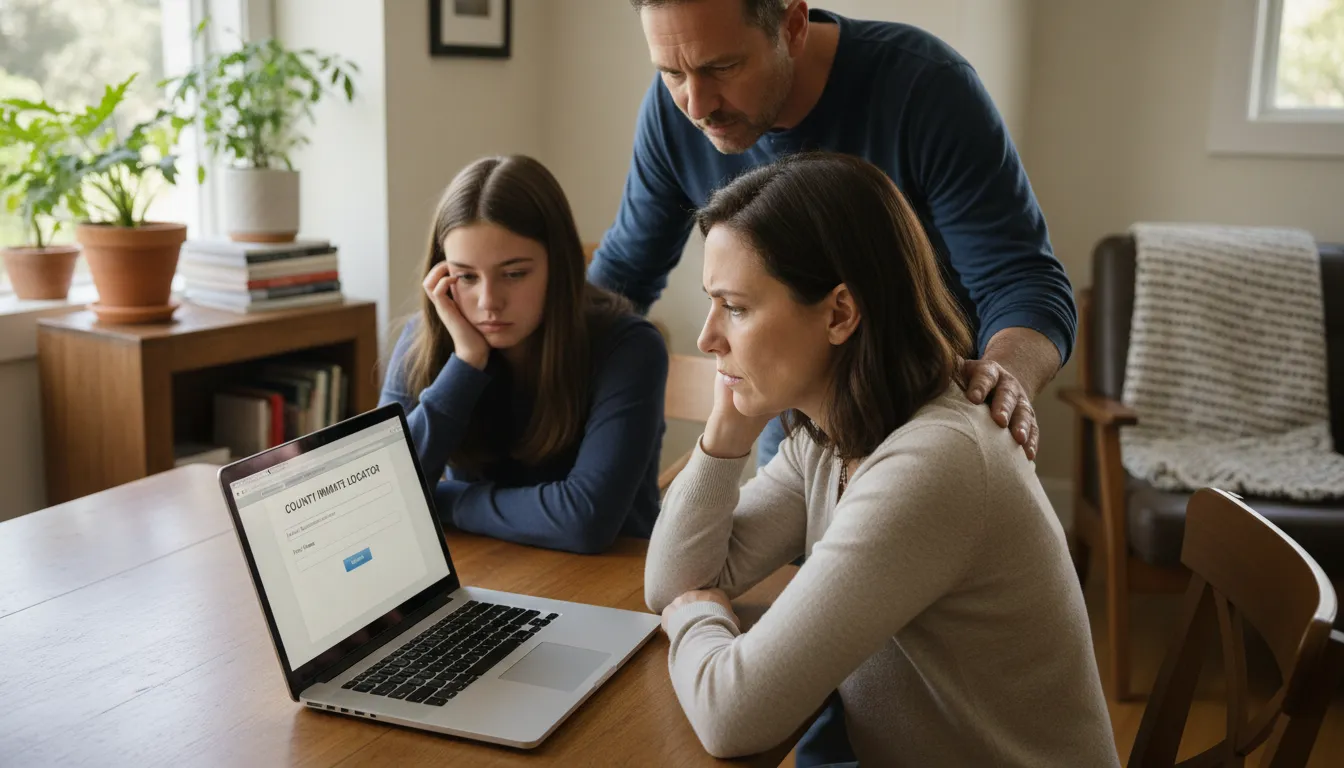
What information do you need before calling a bail bondsman?
A bail bondsman can help faster when you provide clear details about the person in custody. Start a short written record before you call. Do not worry if some details are missing, since Espinoza Bail Bonds can help check them.
Identity details that prevent mix-ups
Write down the person’s exact legal name as it appears on official records. Include the full middle name, suffix, and any known aliases. Also note the person’s date of birth. These details help separate people who have the same or similar names.
Ask for the booking number if it is available. This number points to a specific custody record and can reduce confusion during a search. Official locator systems may use a full name, date of birth, or booking number to find a record. The Orange County Sheriff’s inmate information system is one example of an official county search tool.
- Exact legal name, including middle name and suffix
- Known aliases or other names used
- Date of birth
- Booking number or inmate identification number
Custody and case details
Confirm the jail name, city, and county where the person is being held. A city jail and a county detention center may have separate records. If the location is unclear, review how to find an inmate in California before calling.
Record each listed charge exactly as shown in the custody record. Note whether the record lists a court, hearing date, or case number. These details help the bondsman check the correct case and spot holds that may affect the next step.
- Full jail or detention center name
- City and county of custody
- Listed charges and case number
- Court name and next hearing date
- Any listed hold or transfer status
Bail amount and call notes
Look for the total bail amount and any separate amount tied to each charge. If the record says bail is not set, write that wording down. Do not guess at a figure. The bondsman needs the current amount to explain possible payment and co-signer needs.
Keep the locator page open while you call, or take a screenshot for reference. Note the time you checked it because custody details can change. A status such as released or not in custody may also mean a transfer. The Federal Bureau of Prisons inmate locator explains this distinction for federal custody records.
Have your own contact details ready as well. The bondsman may ask about your relationship to the person and whether you can co-sign. Clear answers help the call stay focused while the case details are reviewed.
How to read the inmate’s booking and bail information
Locator results can look dense when you first open them. Read each field as a snapshot, not a final answer. Before taking action, confirm the details with the jail that currently holds the person.
Identity, booking status, and charges
First, make sure the record belongs to the right person. Compare the full name, date of birth, booking number, arrest date, and listed facility. Save the booking number because jail staff often use it to find the correct record.
Next, check the booking or custody status. Terms vary by county, so use the locator’s own key when one is available. Some county sites also show other services after a search. For example, the San Bernardino County inmate locator includes a link for scheduling a visit.
Review every listed charge, but do not try to decide guilt from this screen. Write down the charge description, case number, and court division. A record may show several charges with different bail entries, so read each row carefully.
Bail amount, holds, and court dates
Look for labels such as bail amount, bond amount, release amount, or no bail. Confirm whether the displayed amount applies to one charge or the full booking. If the field is blank or unclear, ask jail staff whether bail has been set.
Also check for a hold, detainer, warrant, or another agency name. Do not assume that paying the displayed bail will lead to release when a hold appears. Ask which agency placed it and whether that agency must act first.
Record the next court date, time, courthouse, and department exactly as shown. These details help a family prepare questions before contacting a bail bondsman in California. Still, confirm the hearing details with the jail or court because schedules can change.
Release status and final confirmation
A release status needs careful reading. “Released” or “not in custody” may mean the person left that system, not every justice agency. The Federal Bureau of Prisons inmate locator notes that a person may remain with another agency or under supervision.
If the result shows transfer, pending release, or no location, call the listed facility before traveling or paying anything. Ask staff to confirm custody, booking number, bail amount, holds, and release status. Keep notes on the staff member, call time, and information given.
When you need to find an inmate in California for bail, fresh confirmation is the safest next step. Online results can guide your questions, but the holding jail can verify what applies now.
County jail vs. state prison: where should you search?
The right locator depends on which agency has custody. Start with a county jail search after a recent arrest. Use the state prison locator when the person is serving a state sentence under the California Department of Corrections and Rehabilitation (CDCR).
Recent arrests and county jail searches
For a recent arrest, search the sheriff or county corrections website where the arrest happened. Many county systems list current bookings, housing locations, and basic case details. For example, San Bernardino County provides an official Sheriff’s Department inmate locator.
County jail is also the practical starting point when you need to find an inmate in California for bail. Bail questions usually arise while the case is still moving through the local court. Review our guide on how to find an inmate in California before making calls.
State prison and the CDCR locator
Search the state system when the person is in CDCR custody. The CDCR incarcerated person search is the central public tool for selected details about people held at the state level. A county booking search may not show the current prison location.
If you are unsure, try the likely county first, then check CDCR. A missing result does not prove the person is free. Names may be entered differently, records can take time to appear, or custody may have moved.
| Question | County jail | State prison |
|---|---|---|
| Likely situation | Recent arrest or local court case | Serving a state sentence |
| Agency in charge | County sheriff or corrections office | CDCR |
| Locator to use | County inmate or booking search | CDCR incarcerated person search |
| Useful search details | Full name, birth date, or booking number | Full name or CDCR number |
| Bail focus | Check local booking and court details | Confirm custody before asking about next steps |
When the first search has no result
Confirm the spelling of the full legal name and try any known booking or ID number. Then search nearby counties if the arrest location is unclear. If neither county nor CDCR results appear, call the likely jail. Ask which agency has custody.
Keep notes on each locator, the time checked, and any status shown. This prevents repeat searches. It also gives staff clear details if you need help tracing a transfer or confirming the correct facility.
What if the inmate does not appear in an online search?
An empty search result does not always mean the person is not in custody. The arrest may still be going through booking, or the record may sit in another agency’s system. Stay calm and work through a few checks before starting over.
Check the search details
First, confirm the person’s full legal name and spelling. Try any known middle name, prior last name, or hyphenated version. If the tool accepts it, add the correct date of birth or booking number to narrow the results.
- Remove extra spaces, nicknames, and punctuation from the name.
- Try the last name alone if the full-name search returns nothing.
- Check that the date of birth uses the format shown by the search tool.
- Look for notices about account setup or search limits.
Search tools do not all work the same way. For example, the Orange County Sheriff’s Department says its inmate information system requires an email account. Review each site’s directions before deciding the person has no record.
Search the right custody system
Start with the county where the arrest happened, then check nearby counties if the location is unclear. Most county jail searches are run by the local sheriff. The San Bernardino County inmate locator is one example of an official county search.
Also consider which agency may have custody. A city police department may make the arrest, while the county sheriff manages the jail. State prison records appear in the CDCR system, not a county booking search.
- Check the arresting city’s police department for booking instructions.
- Search the sheriff’s locator for the county where the arrest occurred.
- Check nearby county systems when the exact arrest location is unknown.
- Use the CDCR search tool only when state prison custody may apply.
A status such as “released” or “not in custody” can also require more checking. It may mean the person left that agency’s custody or moved elsewhere. Do not assume it confirms where the person is now.
Call for direct help
If the online checks still show no record, call the arresting agency or county jail. Give the person’s full legal name, date of birth, and arrest location if known. Ask whether booking is complete and which facility currently holds the person.
Write down the facility name, booking number, charges, and bail status provided by the agency. These details help a bail bondsman in California check the case and explain the next steps. You can call Espinoza Bail Bonds at (844) 325-8424 for help reviewing the information.
If a staff member cannot find the record, ask which nearby agency should be checked next. Avoid sending money until the person’s identity, custody location, and bail details are confirmed through an official source.
Call Espinoza Bail Bonds at 844-325-8424 for help confirming custody and bail information.
What happens after you locate the inmate?
Once you find an inmate in California for bail, save the details shown in the official record. Next, confirm the record and learn whether bail can be posted. Espinoza Bail Bonds can review the information and explain the available path without promising a release time or result.
What to have ready
Write down the person’s full legal name, booking number, date of birth, facility, charges, and bail amount. Also note the booking date, court date, and any status message. Screenshots can help, but the bonds professional will still confirm the details with the jail.
Check the record again if the status changes before you call. A status such as “not in custody” may mean the person moved to another agency or correctional system. The Federal Bureau of Prisons inmate locator gives this warning for federal records. Similar caution is wise with any search result.
The eligibility review
The bonds professional first confirms that the record matches the right person. They then check the custody location, listed bail amount, charges, and any holds that could affect release. This review helps avoid starting paperwork with old or incomplete information.
Not every listing means a bond can begin at once. The jail may still be processing the booking, or the listed details may need an update. If you know the facility, a jail-specific resource can explain local procedures and options for bail assistance.
Starting the bond process
If the person is eligible for a bond, the bonds professional explains the next steps and the co-signer’s duties. Expect questions about the defendant, the signer, and how the required premium or collateral will be handled. Ask for clear terms before signing any agreement.
- Confirm the defendant’s name, booking number, and jail location.
- Review the bail amount, bond terms, fees, and co-signer duties.
- Provide the requested identification and complete the required forms.
- Keep copies of all signed paperwork and payment records.
After the forms are complete, the bond can be submitted to the holding facility. The jail controls its own review and release schedule, so timing can vary. For help checking the details and beginning the process, use the contact page or call the 24/7 line at (844) 325-8424.
Contact Espinoza Bail Bonds for clear, 24/7 guidance on the next step.
Frequently Asked Questions
How do I perform a CDCR inmate locator search by name?
Use the CDCR California Incarcerated Records and Information Search for someone held in a California state prison. Accept the disclaimer, then search using the person’s full name or CDCR number. CDCR results cover state custody, not most county jails. If no result appears, check the sheriff’s inmate locator for the county where the arrest occurred.
How can I search for an inmate in LA County jail by name?
Open the Los Angeles County Sheriff’s Department inmate locator and enter the person’s full legal name. Add a birth date or booking number when available to narrow the results. A recent booking may not appear immediately, so check again later or call the jail. Confirm the facility, booking number, charges, custody status, and listed bail before contacting a bail bondsman.
What is the inmate lookup process for Riverside County?
Start with the Riverside County Sheriff’s official inmate information search and use the person’s full legal name. Review the matching record carefully, since people can share similar names. Record the booking number, jail location, charges, next court date, and bail amount. If the search returns nothing, contact the sheriff’s corrections office because a recent booking may not be visible yet.
How do I find inmate release date information?
Check the inmate’s official county sheriff or state prison record for a release date, custody status, or transfer note. Release details can change after court hearings, sentence updates, or transfers. A status of released or not in custody may mean the person moved elsewhere, as the Federal Bureau of Prisons explains. Call the listed facility if the status is unclear.
How can I verify if someone is currently in jail?
Search the official locator for the agency most likely holding the person. Most California county jail searches are run by sheriff’s departments, while CDCR covers state prison custody. Use a full name, birth date, or booking number when possible. Confirm the custody status and facility directly with the jail before arranging bail, especially after a recent arrest or transfer.
Ready to Get Help Locating an Inmate?
Waiting to confirm where your loved one is held can delay the next steps and add more stress for everyone involved. Starting now gives you time to gather the full name, birth date, booking details, and jail information a bondsman may need. With those details ready, you can ask focused questions, understand your options, and move toward the bail process with greater clarity.
Ready to get clear guidance? Contact a bail bondsman for help locating an inmate and starting the bail process. Share the information you have, including incomplete search results, so the team can help identify a practical next step without wasting more time.
About the Author

Jose F. Espinoza
Licensed Bail Agent #1841969 · Founder, Espinoza Bail Bonds
Jose F. Espinoza is a U.S. Army veteran, former Military Police officer, and licensed bail agent who founded Espinoza Bail Bonds in 2014. After 25 years of decorated military service, he now brings the same discipline, loyalty, and calm leadership to helping families navigate the bail process. Jose believes in second chances and treats every client with dignity, respect, and compassion.


 Speak to a Bail Agent:
(844) 325-8424
Speak to a Bail Agent:
(844) 325-8424
 Request a Callback: Call
Me
Now!
Request a Callback: Call
Me
Now!
 Other Options:
Contact Us
Other Options:
Contact Us