 Spanish
Bounty Hunter Protection: How Fugitive Agents Stay Safe
Get Someone Out of Jail Fast — 24/7 Help
Reliable, confidential bail bonds available anytime, anywhere in California. We move quickly so you can bring your loved one home.
Get in TouchThe practice of bounty hunting is almost exclusively found in the United States, directly tied to our commercial bail bond system. Unlike in many other countries, when a defendant fails to appear in court here, a private citizen is legally empowered to track them down. This authority isn’t unlimited. It’s defined by a patchwork of state laws that dictate everything from licensing requirements to the rules of engagement. This article breaks down the realities of the profession, separating fact from fiction. We’ll cover their legal powers, the key differences between a bounty hunter and a police officer, and the essential role that bounty hunter protection plays in keeping agents safe while they do their job.
Going to court and facing the judge is a harsh reality that many individuals don’t want to face. After being arrested and fingerprinted the judge will set a bail amount that is equal to the crime and the number of offenses a person has. If an individual doesn’t have the money to pay the bail, they must seek the help of a bail bondsman. The defendant must show up to court to satisfy the terms of their agreement with the bondsmen, or they will loose their collateral. If the defendant doesn’t show up for their court date, the bail bondsmen’s must track them down and turn them over the court. While it sounds easy, it’s anything but.
The High-Stakes World of Bounty Hunting
The collateral that was used to post the bond becomes the possession of the bondsmen. After skipping court, many criminals go on the run wanting to elude their reality. Bounty hunters play a big part in tracking down the criminals and taking them to jail. While television glamorizes the process, it’s actually very dangerous, and the threat of being hurt is one that must be faced every day. There are methods or devices that can help protect the bounty hunter, and they are essential for survival.
How Bounty Hunters Are Paid
The 10% Commission Model
Unlike a typical salaried job, a bounty hunter’s income is based entirely on their success. They work on a commission basis, which is usually around 10% of the total bail amount they are trying to recover. According to Wikipedia, “They only get paid if they successfully bring the fugitive in.” This high-risk, high-reward structure means there’s a powerful incentive to locate the individual who has skipped their court date. If they fail to find the person, they receive no payment for their time, effort, or expenses. This financial pressure is a direct result of the risk a bail bond agency takes on. When a defendant fails to appear in court, the agency is responsible for paying the full bail amount to the court, which is why they turn to a recovery agent to mitigate that loss.
The Reality of Fugitive Recovery
Success Rates and Jurisdictional Limits
Fugitive recovery is a serious business that plays a specific part in our justice system. Bounty hunters are not law enforcement officers; they are private citizens hired to enforce the civil contract a defendant makes when they secure a bail bond. Their success directly impacts the financial stability of the bail bond company that hired them. While they are granted significant powers to do their job, those powers have clear limits. They must operate within the laws of the state they are in, and their authority is strictly tied to the person who has jumped bail. Understanding these boundaries is key to seeing how they function alongside, but separate from, traditional police work. Their role is to ensure the defendant fulfills their legal obligation to appear in court.
The Legal Powers of a Bounty Hunter
The 1873 Supreme Court Ruling: Taylor v. Taintor
The significant authority granted to bounty hunters has deep historical roots, solidified by the 1873 Supreme Court case *Taylor v. Taintor*. This ruling established that when a person is released on bail, they are technically transferred into the custody of their bondsman. This legal concept gives the bondsman—and by extension, the bounty hunter they hire—extraordinary powers. According to Cornell Law School’s Legal Information Institute, these powers include “chasing a fugitive across state lines, arresting a fugitive at any time, [and] entering a fugitive’s home to capture them without needing a special court order (warrant).” This is why a bounty hunter can pursue a fugitive in ways that are off-limits to the general public and even, in some cases, to law enforcement without a warrant.
Rules for Entering a Property
A Fugitive’s Home vs. a Third-Party Residence
While a bounty hunter has the right to enter a fugitive’s home, that power has a critical limit: it does not extend to the homes of other people. A bounty hunter can legally enter the fugitive’s listed residence without a warrant because the bail agreement implies consent for the bondsman to find them there. However, they “cannot legally enter the home of someone else (a ‘third party’) to find a fugitive.” If a bounty hunter believes a fugitive is hiding at a friend’s or family member’s house, they cannot simply break down the door. They must have permission from the homeowner to enter or be accompanied by law enforcement who have a proper warrant. This distinction protects the rights of innocent citizens who are not part of the bail agreement.
Bounty Hunters vs. Law Enforcement
Understanding Liability and Immunity
A common misconception is that bounty hunters operate with the same legal protections as police officers, but this isn’t true. Law enforcement officers are often protected by qualified immunity, which shields them from liability in many situations. Bounty hunters do not have this protection. The Legal Information Institute notes that “bounty hunters do not have the same legal protections (immunities) as police officers.” This means if a bounty hunter breaks the law, wrongfully injures someone, or damages property during a recovery, they can be held personally responsible, facing both civil lawsuits and criminal charges. This lack of immunity serves as a crucial check on their power, holding them accountable for their actions in a way that is distinct from government agents.
State-by-State Bounty Hunter Regulations
A Practice Unique to the United States
The concept of bounty hunting is a uniquely American practice, deeply intertwined with our commercial bail bond system. In fact, “Bounty hunting is almost only found in the United States. It’s illegal in most other countries.” This is largely because most other nations have different pretrial systems, such as government-funded bail or releasing defendants on their own recognizance, which eliminates the need for a private industry focused on fugitive recovery. The existence of bounty hunters in the U.S. is a direct result of the financial role that bail bond companies play in the judicial process, creating a need for a mechanism to recover defendants who fail to uphold their end of the agreement.
The Patchwork of State Laws
There is no single federal law that governs bounty hunting; instead, it’s regulated by a patchwork of state laws that vary widely. Some states have very few regulations, while others have strict licensing and training requirements. For example, “States like Texas and California require bounty hunters to have a license.” In California, recovery agents must complete specific training courses and pass a background check to operate legally. This ensures a level of professionalism and accountability within the industry. When you work with a reputable and long-standing company like Jose Espinoza Bail Bonds, you can be confident that any recovery efforts are handled by professionals who understand and comply with all state laws.
An Example of Strict State Laws: Texas
Licensing and Firearm Rules
Texas offers a clear example of how strictly some states regulate the fugitive recovery industry. The state has moved away from the term “bounty hunter” and instead requires individuals to hold specific professional licenses. According to the Texas Department of Public Safety, “Only police officers, licensed private investigators, or security officers working for a licensed guard company can be hired by a bail bond company to find someone who skipped bail.” This ensures that the people performing these high-stakes jobs have been vetted, trained, and are held to a professional standard. Furthermore, if they carry a firearm, they must also have the appropriate license and training, adding another layer of safety and regulation to their work.
Rules of Conduct and Identification
In addition to licensing, Texas law dictates how recovery agents must conduct themselves in the field to prevent abuse and protect the public. The rules are designed to ensure transparency and accountability. For instance, when apprehending a fugitive, agents “must clearly say who they are (a private security officer or private investigator working for a bail bond company) and show their ID card.” They cannot misrepresent themselves as police officers or federal agents. This requirement helps demystify their role and confirms their legal authority to act, ensuring that all parties, including the person being arrested and any bystanders, understand what is happening and who is in charge.
Gearing Up: Essential Bounty Hunter Protection
Being a bounty hunter can be exciting, dangerous, and the biggest adrenaline rush around. However, it’s not all fun and games. Chasing criminals is dangerous, but the situation is compounded by a number of outside factors. Both bail bondsmen and bounty hunters need to have weapons to protect themselves and be able to do their job without fear of being harmed. Body armor is the best defense against a criminal that’s armed and dangerous. Bulletproof vests are one method that many are familiar with, but there are many other options. From stab proof vests to ballistic helmets and riot gear, there is a myriad of various types of equipment.
Professional Identification
It’s not like the movies where a bounty hunter can operate completely under the radar. In reality, they have to follow strict legal guidelines about how they identify themselves to ensure transparency and safety for everyone involved. For example, regulations in states like Texas require that bounty hunters must clearly state who they are—a private investigator or security officer working for a bail bond company—and present their ID card. This ensures that individuals understand exactly who they are dealing with and the authority they carry. It’s a critical step in making sure their work is conducted ethically and responsibly.
A major rule is that bounty hunters are strictly forbidden from impersonating law enforcement. The Texas Department of Public Safety is very clear that “They cannot wear uniforms, badges, or anything that makes them look like a police officer or government agent.” This regulation prevents confusion and maintains a firm line between private fugitive recovery and official police work. While they can’t look like cops, it is common practice for them to wear clothing that identifies them as a “bail enforcement agent,” which clarifies their role during an apprehension while keeping them within legal boundaries.
How to Choose the Right Ballistic Protection
Bounty hunters and bail bondsmen often use bulletproof vests, as they are the most suitable form of protection. Firearms are the most serious threat on the streets, and working in a neighborhood where criminals live; means being prepared for being face-to-face with deadly weapons. When it comes to ballistic protection, the vests are tested and graded by the US National Institute of Justice. They put a grading on it according to the magnitude of ammunition it can stop. Some vests, like the Level II, can stop a .357 Magnum and a 9 mm. The Level IV can stop higher caliber rounds and the 7.62x51mm NATO. The more protection the vest offers, the bulkier it will be. However, the extra weight is necessary to provide the extra protection.
Covert vs. Overt Body Armor
When choosing the right protective gear, a bounty hunter has to decide between two main styles of body armor: covert and overt. Covert vests are designed to be worn discreetly under clothing, which is a huge advantage when you need the element of surprise. They allow a bounty hunter to approach a situation without immediately revealing they’re wearing protection, maintaining a low-profile appearance. These vests are often made from lighter, more breathable materials to keep them from being noticeable. On the other hand, overt vests are worn over clothing and are much more visible. While they are typically bulkier, they offer stronger protection for high-risk scenarios and can stop higher-caliber bullets. The visibility of an overt vest can also act as a powerful deterrent, signaling to a fugitive that the bounty hunter is prepared for a serious confrontation.
Beyond Bullets: Defending Against Knives and Spikes
Firearms are a big threat, but they are not the only threat to a bounty hunter. Due to the nature of the game, the risk is always going to be there regardless of the protection. The greater risk seems to be to those that are in close range. Just as dangerous as a firearm, the knife or spiked weapon can do just as much damage. While the bullet proof vest does wonders for the firearms, they don’t do anything for a spiked weapon. The materials in these vests absorb and disperse the energy to thwart a bullet, but they cannot stop a knife puncture. Sounds strange, but a knife is able to puncture the fabric in the bulletproof vest and then pass through the fibers. A vest that is made for stab and spike protection uses chainmail to protect the bounty hunter from these weapons. Laminate or chainmail both provide an excellent layer of protection that can take a puncture wound without breaking down.
Why Your Safety Should Always Come First
Sure, some think chasing criminals is a fun job and one they would enjoy, but ask any bounty hunter and they will tell you the real dangers lurking around every corner. Being protected offers some sense that even when faced with danger, the hunter has a fighting chance of survival. Bringing criminals to jail isn’t glamorous, but it’s something that is necessary to keep the streets safe. By adding a vest and some other protective gear under the clothes, it could save a life. Consider Reading about bail fugitive fates
Frequently Asked Questions
What’s the real difference between a bounty hunter and a police officer? The biggest difference comes down to their authority and accountability. A police officer is a government employee with broad powers to enforce public laws, and they are often protected from personal lawsuits by what’s known as qualified immunity. A bounty hunter, or fugitive recovery agent, is a private citizen hired by a bail bond company to enforce a civil contract. Their power is limited to finding a specific person who skipped bail. They have no qualified immunity, meaning they can be held personally and financially responsible if they break the law or injure someone.
Can a bounty hunter enter any house they want to find someone? No, their authority has very clear limits. Based on a long-standing Supreme Court ruling, a bounty hunter can legally enter the fugitive’s own home without a warrant. This is because the bail agreement implies that the person gives up a certain amount of privacy. However, that power stops at the fugitive’s doorstep. They cannot enter a third-party residence—like a friend’s or relative’s house—without getting permission from the homeowner or having law enforcement with a proper warrant present.
If a bounty hunter has to get involved, will I have to pay them? You won’t pay the bounty hunter directly. Their payment, which is typically a percentage of the bail amount, comes from the bail bond company. However, the situation does have serious financial consequences for you. When someone skips their court date, they break their contract with the bail bond company. This means the collateral you put up to secure the bond—whether it’s cash, property, or another asset—is now forfeited to the bondsman to cover the cost of the bond and the recovery effort.
Are there any rules bounty hunters have to follow? Absolutely. There isn’t a single federal law, so regulations vary from state to state, and many are quite strict. In states like California and Texas, for example, recovery agents must be licensed, which involves completing specific training and passing background checks. These state laws also dictate how they must conduct themselves, what kind of gear they can use, and how they must identify themselves during an arrest. This ensures they operate professionally and within legal boundaries.
Why can’t a bounty hunter just wear a police uniform? Impersonating a law enforcement officer is illegal and strictly forbidden. State laws are very clear that a bounty hunter cannot wear uniforms, badges, or anything else that might make someone think they are a police officer or a government agent. While they can’t look like cops, they often wear vests or clothing that clearly identifies them as a “Bail Enforcement Agent.” This clarifies their role and legal authority without creating dangerous confusion for the public.
Key Takeaways
- Their Legal Authority Has Clear Boundaries: A bounty hunter can legally enter a fugitive’s home without a warrant, but this power stops at a third party’s door. They also don’t have the same legal immunity as police, meaning they are fully accountable for their actions.
- Every State Plays by Different Rules: There’s no single federal law for bounty hunting, so regulations on licensing, training, and conduct change drastically from one state to another. This makes it crucial to work with professionals who operate legally within their specific jurisdiction.
- Safety Gear is a Professional Necessity: Fugitive recovery is a high-risk, commission-based job that requires serious preparation. Agents rely on essential protective equipment, like covert body armor and stab-proof vests, to manage the real-world dangers they face.
Related Articles
- Bounty Hunter Protection | Espinoza Bail Bonds
- Bounty Laws & Bounty Hunters | Espinoza Bail Bonds
- Difference between Bail Agents and Bounty Hunters
- How to Become a Bounty Hunter | Espinoza Bail Bonds
- Bail Fugitive Fates | Espinoza Bail Bonds
About the Author
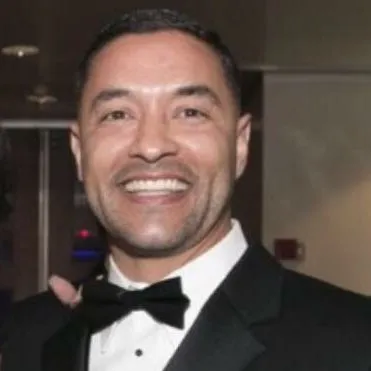
Jose F. Espinoza
Licensed Bail Agent #1841969 · Founder, Espinoza Bail Bonds
Jose F. Espinoza is a U.S. Army veteran, former Military Police officer, and licensed bail agent who founded Espinoza Bail Bonds in 2014. After 25 years of decorated military service, he now brings the same discipline, loyalty, and calm leadership to helping families navigate the bail process. Jose believes in second chances and treats every client with dignity, respect, and compassion.

 Speak to a Bail Agent:
(844) 325-8424
Speak to a Bail Agent:
(844) 325-8424
 Request a Callback: Call
Me
Now!
Request a Callback: Call
Me
Now!
 Other Options:
Contact Us
Other Options:
Contact Us